 Skip to content

How are you going to power your van and all of the stuff inside? These days it’s not just a fridge and heating, but mobiles phones, TVs, fans, lights and everything else that makes for a proper campervan.
Again, this is a decision that needs to be made long before the van is being gutted.
When we are converting vans for people, the choice is typically between 12V off grid and 240V hook up. Some people have both.
This blog will break down what they’re used for and how. Understanding how each option works and which suits your travel plans is essential to building a campervan to meets the requirements for your trips.
How do you use your van?
Top tip: Weekend campers usually only need a simple 12V setup. Long-term travellers often benefit from a larger battery, a bigger solar set up and potentially an inverter for dual-power options. But here’s everything you need to know to get started deciding.
Off-grid and stealth camping
What is 12V?
Off-grid 12V camping relies on a battery system charged by solar panels or your vehicle, powering 12V DC devices like lights, phones, and fridges directly, or converting to 230V AC with an inverter for standard home appliances.
Why do people choose 12V off-grid?
Off-grid 12V camping is all about independence. A 12V leisure battery split charge system powers essential campervan components such as LED lighting, water pumps, USB sockets, diesel heaters, control panels, and a fridge. When paired with leisure batteries, this setup allows you to camp without relying on campsites or external power sources.
For lots of campervan owners, this means freedom to park up in their favourite location for the night. Could be a woodland, beach or just a quiet spot that’s off the beaten track.
Off-grid systems are ideal for stealth camping, wild camping, festivals, spontaneous trips and basically going anywhere that is going to be uncertain in terms of charging up.
Adding solar power to a 12V campervan set up
Adding solar panels to a 12V campervan system takes off-grid camping to another level.
Solar panels charge the leisure batteries during daylight hours. Basically this maintains power without running the engine or plugging into mains 240v. Yes it does reduce fuel use but also keeps the van quieter and more environmentally friendly. Sometimes you just want a bit of peace and quiet.
Solar is particularly beneficial for van lifers who spend multiple days off-grid or use power-hungry appliances. Ffridges and heaters are the worst culprits for energy use, of course we wouwlnt be without them. This is where solar installations pay for themselves.
Solar usually makes the most of modern lithium or AGM battery technology. Lithium in particular is considered superior. That’s because of it’s widely recognised performance in lifespan, weight, and efficiency.
240V hook-up systems and why people choose them
What is 240V? AI Overview
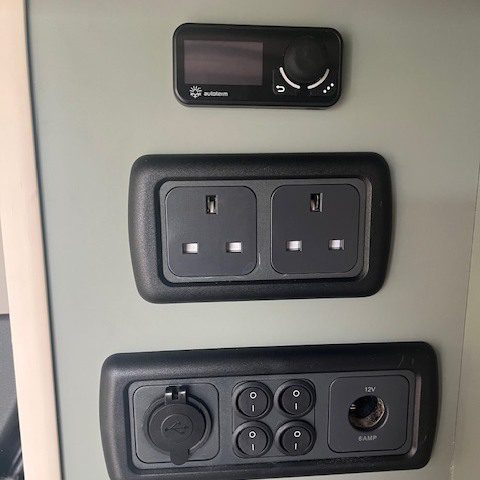
A 240V hook-up system provides mains electricity (like at home) to campervans. It will allow you to do all of the standard things in your camper, like power standard appliances (kettles, hair dryers, and laptops etc). They plug into campsite outlets, using a kit with an external inlet, consumer unit, RCD, circuit breakers, sockets, and cables.
Uses:
- Kettles
- Laptops
- TVs
- Air fryers
- Induction hobs
- Microwaves
- Fridges
- Phone chargers
A 240V hook-up system provides standard plug sockets inside the van just like at home. This is one of the reasons people like them so much.
Hook-up systems are popular with campervan owners who regularly stay on campsites or prefer the reassurance of constant power availability. They are especially good in winter months when solar output may be reduced by heavy clouds, snow or rain.
Yes, this can impact slightly on the solar power input which is why a lot of people choose both systems.
There is no one size fits all
There is no one-size-fits-all solution for any van lifer. Personally, I prefer a traditional 240V hook-up setup. It’s just nice to have that choice in the back of your mind to do whatever you want, whenever you want to do it.
Both systems give the flexibility to camp off-grid while still benefiting from hook-up power when you get a chance to use it. If you and your other half have slightly different ideas about camping, it makes sure that everyone is happy.
Making sure your van electrics are safe
If you’re a qualified sparky, the temptation can be to install electrics yourself. We advise against it for a few reasons.
- Electrics in a van are very different compared to installing in a house in terms of cable routes and fixing it all down.
- Vibration from the van can undo your hard work if it’s not all fixed down the way it should be.
When we are working on a campervan that includes 240V electrical hook-ups or gas installations it will always undergo ua full Electrical Habitation and Gas Certification by an independent Habitation Inspector.
We’ve written another blog about habitation inspections here.🔗
This ensures all systems are professionally fitted, safe, and fully compliant with UK campervan and motorhome regulations. You don’t need it by law if your van is for personal use… but we would highly recommend them for the peace of mind and safety of you and your passengers. If you plan to sell or rent out your van, you will need a habitation inspection carried out asap.
Every inspection checks wiring, circuit protection, ventilation, and appliance installation – in short, it confirms that all work meets industry standards and is safe.
If you want to talk to a member of our team about electrics before you take the plunge, come down and see us in the workshop. We would love to met you.

About The Author
The Dub Hut are campervan conversion specialists based in Ashford, Kent. Their workshop is a one stop shop for all kinds of domestic and commercial van conversions, supplying upholstery, electrical work, dampening, heaters, solar power, pop tops, rocks and roll beds, kitchens, mobile workshops and more. They have been established since 2018 and operate an open-door policy for all customers. Please drop by during office hours to see vans being worked on in real time or to speak to our team.
www.thedubhut.co.uk Join in on the fun! Facebook | Instagram | TikTok