 Skip to content

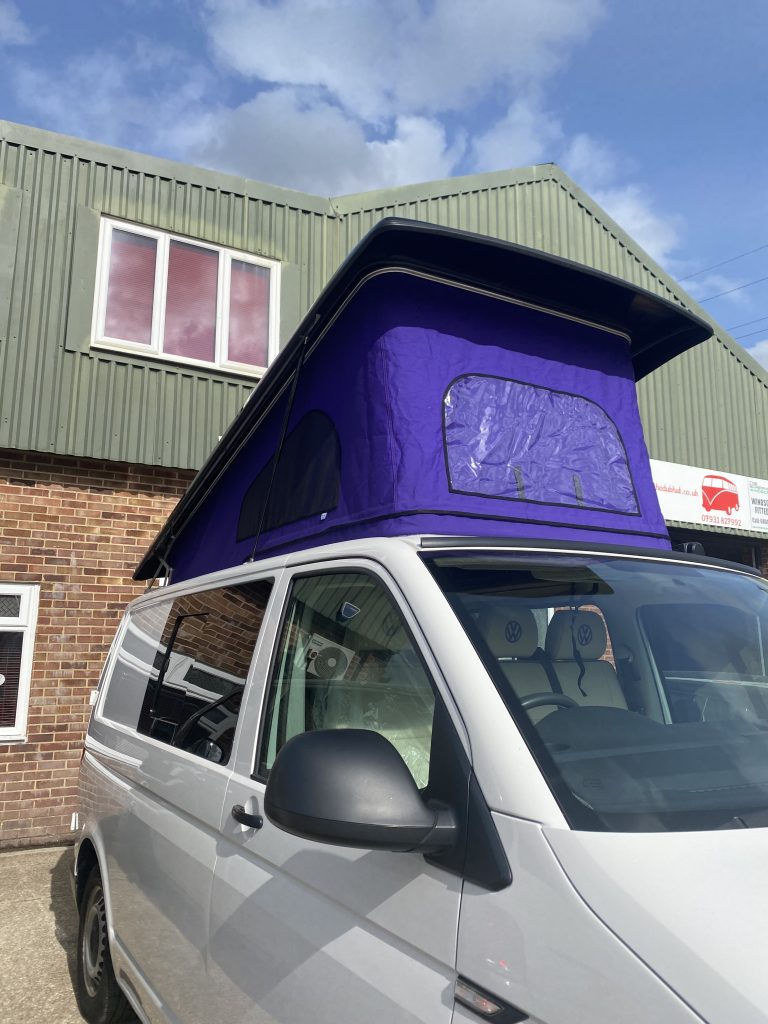
What’s it like converting a commercial van into a campervan? These days you’ll see lots of campervans that do not look like the traditional “motorhome” of the 80’s and 90’s. Instead they are commercial vans that have been completely stripped out and converted into a liveable space for camping on and off grid. You’re looking at VW T5 and T6 models, Ford Caddy’s, Renault Trafics, and more.
Many people don’t realise that their old work van could be renovated for this very purpose.
Commercial vans are a blank canvas for holidays
The trend of taking a proper workhorse type vehicle and gutting it and starting over is a very rewarding project for lots of people. It’s not a project for the faint hearted. Lots of out customers like to do as much of the van conversion as they can get away with, and then call us in to do the rest.
At The Dub Hut Ltd, one of the many exciting aspects of our work is transforming hardworking commercial vans into beautifully finished, fully equipped campervans that you can take absolutely anywhere.
These vehicles often arrive having spent years reliably serving a business. Plumbers, sparkys, dog walkers, large taxis… we have seen them all. Vans originally used for shifting tools, materials, and people day in, day out. The good thing about commercial vans is they are usually really looked-after with a full service history and minimal owners. This makes commercial vans a great starting point for the purpose of becoming a camper.

Reusing, renovating and repurposing your work van
Actually, what we find is that when the time comes to retire commercial vans from daily duties, many customers are surprised by just how much potential their van still holds.
Rather than parting with a vehicle that has served them well and been mechanically cared for, converting it into a campervan allows it to take on a whole new life. Our customers either do their vans up to sell on, or keep them for holidays in the UK and Europe.
Custom vans
The amazing thing about commercial vans is, with good forward-planning they can become pretty much anything.
An old work van is an excellent blank canvas for any campervan. It doesn’t matter if you have a high roof or standard roof, long wheelbase or short wheelbase. A work van’s structure and shape means they have the perfect dimensions for installing things like:
- double beds
- kitchens
- toilets
- dog crates
- showers
- sinks, hobs and fridges
- storage and sockets
- tvs and lighting
- heating
- blinds and curtains
- pop top roofs
- awnings
- and more

How to start planning your conversion
Knowing the history of the van offers you confidence as you begin your campervan journey.
When customers come into the Dub Hut to talk about their van, we ask them how they like to spend their time. This allows for a design that can cater to activities and fulfilling the enjoyment of future trips. Its helps dictate what will go in the van first, or help decide on deal breakers (some people can’t live without a toilet pod, others need a clever ways to deal with a wet dog).
Larger vehicles
The larger vehicles often lend themselves perfectly to fixed beds, which remain really popular, saving you the hassle of having to create a bed every night. These typically sit above a garage area, providing a large storage area for all of your camping equipment, bikes, outdoor furniture, and housing for essential systems such as batteries, heaters, and Truma boilers.
In larger vans, showers and toilets (wet rooms) often have become increasingly popular. These additions allow customers to venture further off-grid, park up in quieter locations without campsite facilities, and enjoy complete independence.
Kitchens are a sought after feature and can be tailored entirely to suit individual lifestyles. Some customers choose a full setup with two or even three-ring gas hobs, sinks, and fridges. Others prefer induction cooking or even opting not to have any cooking options. You might be someone who prefers a bbq or a visit to the local gastro-pub.
For those, like many of us here at The Dub Hut who attend festivals or travel regularly in their campervans off grid, having your own private, clean facilities is a luxury that quickly becomes essential.

Common problems people run into converting a commercial van into a camper
While a DIY campervan can feel like a really exciting project for a well-seasoned trade or handy person – there are some elements of the job that are difficult, and can easily go wrong.
Here are some of the most common pickles we see people get into…
Lining insulation and carpeting
Lining or carpet and insulation is difficult to do on your own without specialist knowledge. Our team are experts at gutting, insulating, deadening and carpeting the inside of your van. This process often has to take electrics and plumbing into account early doors. If you’re not sure, give us a call to talk about it.
Cutting holes
Cutting holes in the van – like windows and pop tops. Once you’ve cut a hole in your van, there is no going back. This means it needs to be a perfect cut first time.
Safe electrics and gas
If you’re a qualified sparkie, yes technically you can do your own electrics, but we still wouldn’t advise it. Electrics in a house are fitted differently compared to those in a campervan. They need to take placement and the constant vibration of movement from the van into consideration. This is something that derails even the best efforts in DIY campers. How all elements are fixed down for travel has a knack to it.
Electrics and gas need to be officially signed off if you plan on selling your van on or renting out to friends, family or holiday makers. This is called an annual habitation certificate or “habitation check”. All of our vans come with one of these checks as standard for the sake of safety.
Furniture and storage
Speaking of making sure everyhting is “nailed down” properly – self built campervan furniture can also come a cropper if it has been made for a home, rather than a van. Vibration form the van can really do a number on the most beautiful, hand-crafted cupboards or seats. (We’re happy to advise on this).
Waterproofing and tanks
Showers and underslung water tanks don’t need signing off, but they are one of those jobs that if they go wrong, your van could be in real trouble. Professional waterproofing for showers is always advised. It will be well worth it when you’re enjoying a nice hot shower overlooking a mountainside.
There’s nothing more satisfying than a finished campervan
Seeing a customer step into their finished camper for the first time is always a special moment for us. They’re not just a van, campers give people a try sense of freedom, a way to relax and enjoy a completely different pace of life. It’s al about increased quality of life and making memories with your loved ones. Magic.
Good luck on your van conversion adventures. If you need any help, you know where we are. 😄
About The Author
The Dub Hut are campervan conversion specialists based in Ashford, Kent. Their workshop is a one stop shop for all kinds of domestic and commercial van conversions, supplying upholstery, electrical work, dampening, heaters, solar power, pop tops, rocks and roll beds, kitchens, mobile workshops and more. They have been established since 2018 and operate an open-door policy for all customers. Please drop by during office hours to see vans being worked on in real time or to speak to our team.
www.thedubhut.co.uk Join in on the fun! Facebook | Instagram | TikTok