 Skip to content

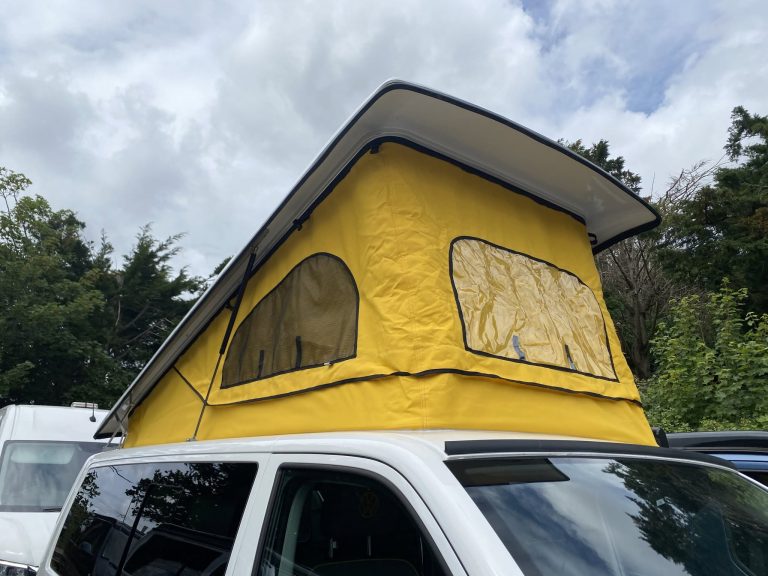
Campervans are all well and good, but for some people there just isnt enough head-height to work with. A huge percentage of campervan conversions go through a change of roof, the two main changes being either a pop top or high top installation.
As we always say to people who come through our door – it’s all about how you want to use your van based around what your holidays and daily life looks like. Those decisions are best for dictating designs and changes to campervans.
We install both styles of these campervan roofs but before you take the leap we thought it was time to jot down some personal as well as professional experience of roof changes.
Here are some things we noticed about the different roof types that you might want to take into consideration.
Why change the campervan roof at all?
Is the roof your van currently has suitable for day to day camping? If you have found yourself stooping or experiencing a bad back, it’s probably time you looked at roofing options.
Choosing the right roof is one of the most important decisions you will make during a campervan conversion as if affects the look, design, value, userbility, insulation, accessibility of the van.
On top of that, the right roof choice impacts how it feels to live in and how you continue to use it throughout the year.
Two of the most popular options on the campervan market are pop-top roofs and high-top roofs, each offering their own pros and cons. Let’s walk through them together…
Pop-top pros
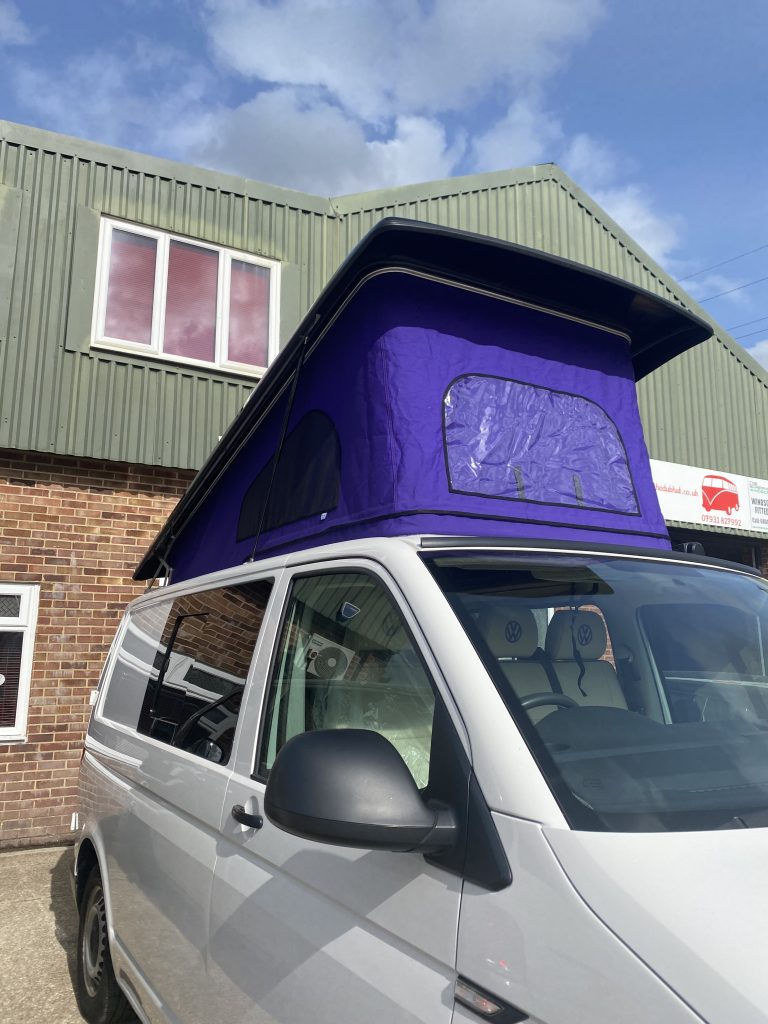
Pop-top roofs are an excellent choice for customers who want flexibility to increase the hight of their living space when stationary.
Height and space
When the roof is closed, the van retains a lower overall height, making it easier to park, fit into standard garages, and access car parks or campsite areas with height restrictions. When raised, a pop-top roof provides valuable standing room inside the van, instantly transforming the living space. We always encourage our visitors and customers passing through to stand in one of our van conversions to see how it feels. The difference really is amazing.
Dual use
This makes pop-top vans particularly appealing for those who use their camper as a daily driver or family vehicle when not on holiday.
Sleeping areas
Typically, pop-tops also include an integrated sleeping/mattress area. This makes them ideal for sleeping more than 2 people in a van. For example you might want additional beds without sacrificing interior space during the day.
The dual-purpose design of pop-tops allows customers to enjoy flexible use of space. To put it simply they are compact on the road but spacious and comfy when parked.
Ventilation and views
Pop tops are lovely because they come with plastic windows and mozzie nets that can be unzipped to make the most of mountainside views, stargazing and covert bird watching.
Pop-top cons
Durability
Pop tops are durable, as they are made from a marine nylon fabric canvas. This is really sturdy stuff, but it is after all – a fabric, which can tear if you happen to have a clumsy moment either driving or setting up.
Pop top roofs are also UV resistant to a degree – but not 100% fully UV protected. Does this mean they will perish over time? Possibly, but we are talking decades rather than a few years, depending on exposure.
No sound deadening
Because pop-tops are made from a flexible, waterproof canvas, there is next to no sound deadening or insulation. It’s a lot more like camping in a tent when you finally go to sleep. Not just because of noises outside, but also because it lacks insulation in the same way a tent does. You might get chilly at night, or feel like the investment in a diesel heater is undermined by this kind of installation. How you like to sleep will likely dictate the choice.
Pop tops have their limits in stormy weather. For the safety of you, and the durability of your pop top, they should never be up in high winds. Depending on where you’re travelling, this could be inconvenient.
That being said, we really like pop tops and install them very regularly. Our favourite pop top brands are Westdubs and AusTops who offer both front and rear elevating pop tops.
High-top roof pros
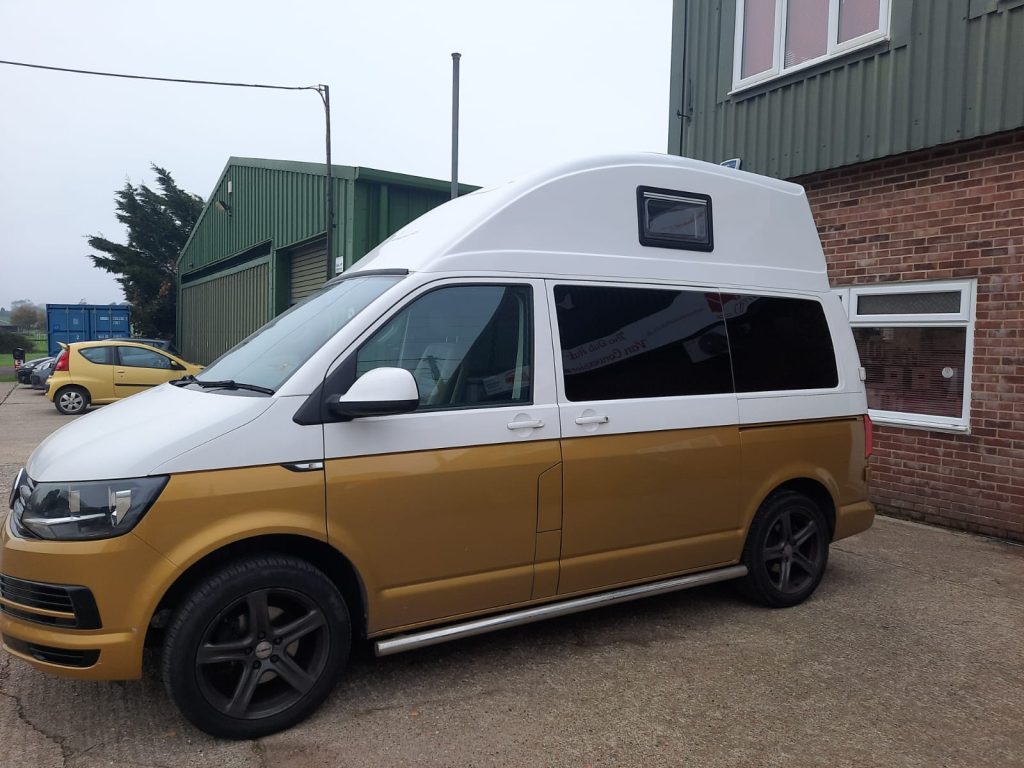
High-top roofs, on the other hand, are a permeant installation to increase the height and space in your van.
They’re massive
High top roofs are huge so you really get your money’s worth if you want more space and less fuss in a single installation.
No operation required
Permanent head height means there is no need to raise or lower the roof, making the van ready to use at any moment and especially popular for those customers who might struggle to raise or close a pop top.
DVLA classification
Another advantage of having a high top is that DVLA will recognise this addition to your campervan and reclassify the vehicle as a motor caravan as opposed to a panel van with windows.
They survive in poor weather conditions
A fixed roof is great in poor weather or on very long drives for people who want to frequently stop for breaks. We have been told by customers that the extra height also creates a more open and airy feel for the interior, which is more homely for longer trips. If you want to sit in the van with a cup of tea while it’s raging cats and dogs outside, this will be for you.
Storage, light and fresh air
High-top roofs provide more opportunities for storage compared to a pop top. Overhead lockers, enhanced lighting layouts, and even taller furniture or showers can be incorporated into the build. This makes high-tops especially popular with customers who spend extended periods travelling, live in their van part-time or full-time, or want maximum comfort regardless of the season.
If you are also opting for new side windows, you’ll get more light and ventilation.
High-top roof cons
They’re massive
Like we said earlier, they are MASSIVE. This can also be a problem for road users who perhaps aren’t confident driving a larger vehicle, or who want to access campsites/areas with toilets/ national parks or overnight parking. Lots of camping venues and areas of national beauty have height restrictions. This roof design will send you way over the typical 6’6″ height limit.
Damage and repairs
It also means keeping an eye out for trees and anything else that might hang low overhead. High top roofs are made of fibreglass which is a good, sturdy material, but it can crack under blunt force. While most repairs are possible – they don’t look very pretty.
Fibreglass cant be insulated
Just like pop top roofs- high tops cant be insulated. Fibreglass just doesn’t allow for it. This means that the change in roof can equate to lower energy efficiency. It;s a swings and roundabouts situation – if you want more height, insulation will fall short.
We like using REIMO high tops.
Come and see us to talk about your van roof
We work closely with our customers at our workshop just outside of Ashford. There’s an open-door policy, so if yo ant to come in and see us during office hours, we’d love to see you. Chat to our fitters and see some vans being worked on in real time.

About The Author
The Dub Hut are campervan conversion specialists based in Ashford, Kent. Their workshop is a one stop shop for all kinds of domestic and commercial van conversions, supplying upholstery, electrical work, dampening, heaters, solar power, pop tops, rocks and roll beds, kitchens, mobile workshops and more. They have been established since 2018 and operate an open-door policy for all customers. Please drop by during office hours to see vans being worked on in real time or to speak to our team.
www.thedubhut.co.uk Join in on the fun! Facebook | Instagram | TikTok